Marcelo Ebrard rules out independent candidacy; analyzes searching for the Citizen Movement
Marcelo Ebrard rules out independent candidacy; analyzes searching for the Citizen Movement
–
It was the big surprise in the first round and it did so again in the final vote of the presidential elections in Guatemala.
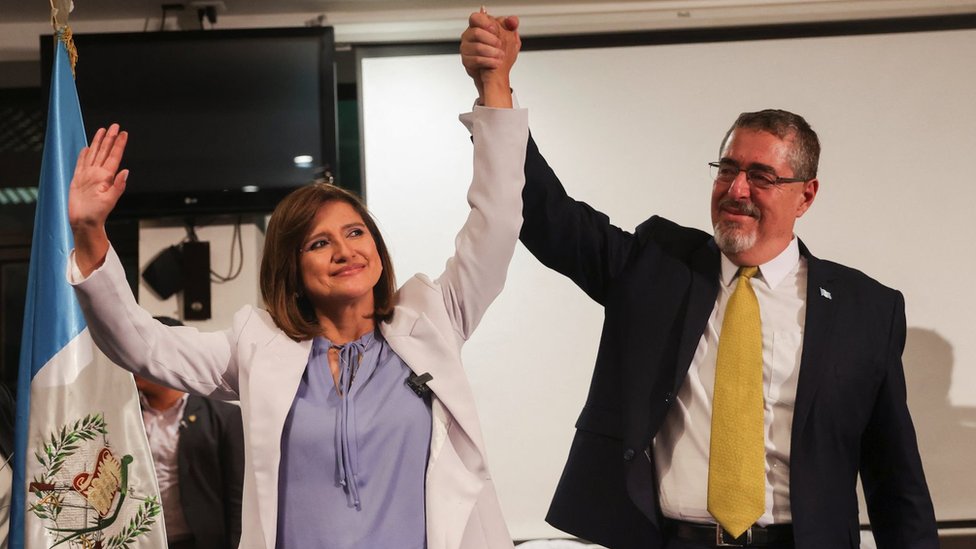
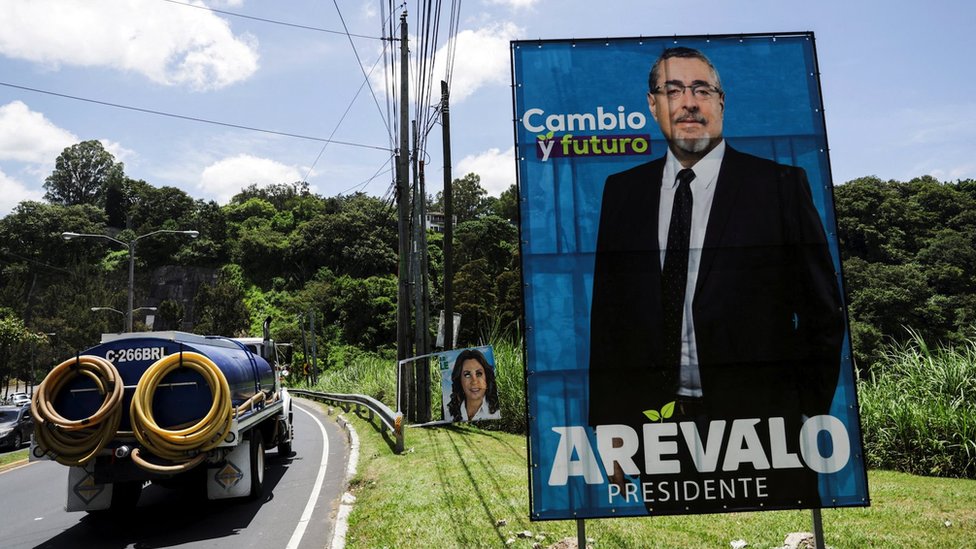
Bernardo Arévalo, the progressive candidate who breaks with the conservative tendency of the last governments and who presented himself as “the anti-corruption candidate” who will leave the traditional political class behind, comfortably won the elections this Sunday with 58% of the votes.
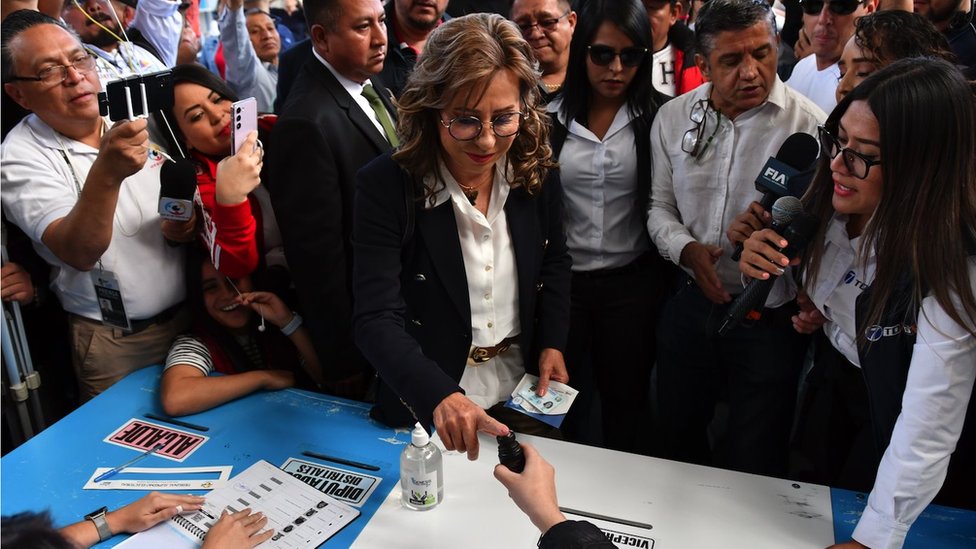
Her rival, the former first lady Sandra Torreswas on the verge of the presidency for the third consecutive time with 37% as a UNE candidate, a formation created as a social democrat but that turned to notable conservatism and represented the continuity of the current government.
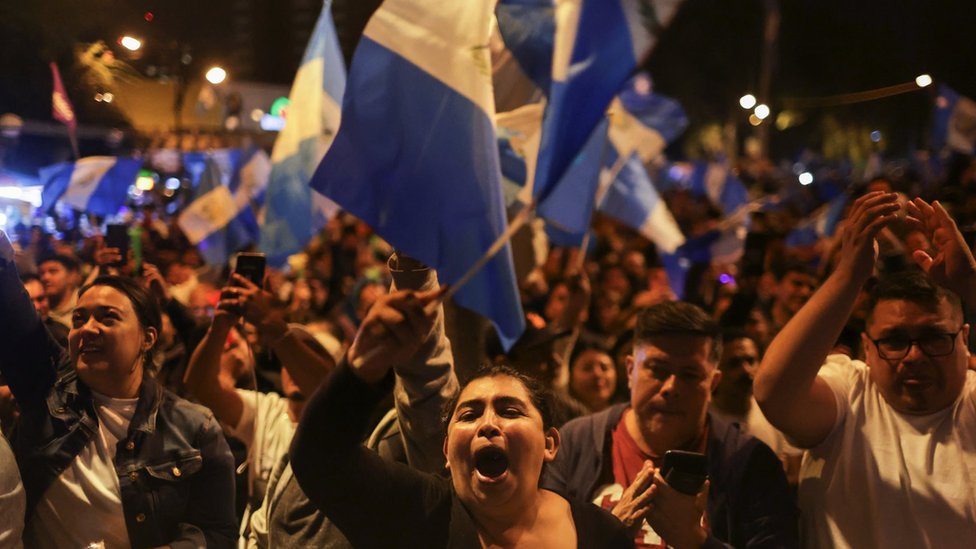
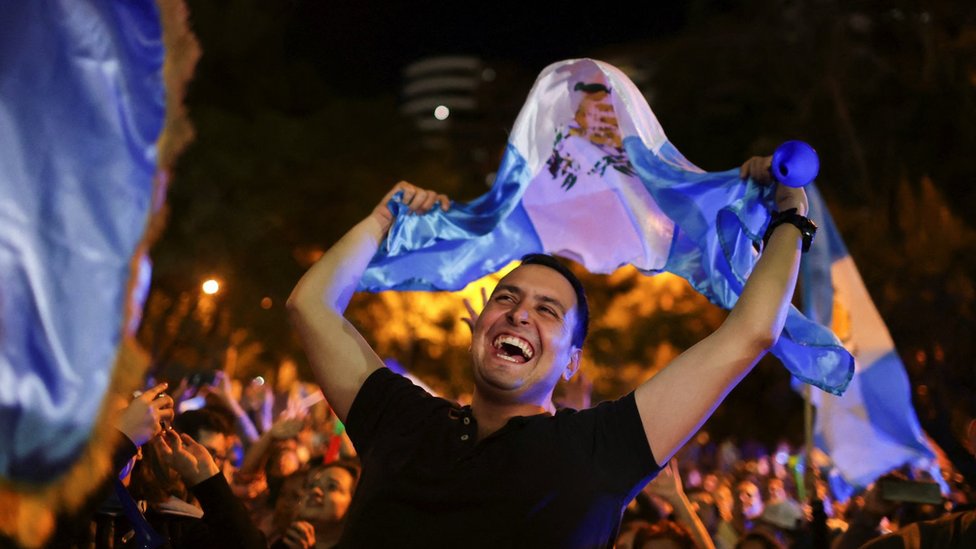
Thousands of people took to the streets to celebrate the results, fed up with the multiple complaints of corruption in the State, and who claimed to see in Arévalo hope for change compared to the recent years of institutional deterioration and greater authoritarianism from the Guatemalan government.
“What the people are shouting is ‘enough of so much corruption’ (…). We will work to guarantee institutions that earn your trust (…). This victory belongs to the people and now, united as the people of Guatemala, we will fight against corruption,” Arévalo said in his first appearance after learning of his victory and in which he referred to his future mandate as “the government of the new spring.”
“I congratulate Bernardo Arévalo and extend the invitation to begin the orderly transition, the day after the results are made official,” the current president tweeted, for his part. Alejandro Giammattei.
Arévalo achieved victory this Sunday after weeks of uncertainty about whether he could really participate and end up assuming the presidency on January 14, 2024, as stipulated by the deadlines.
The reason is that since his unexpected passage to the second round, his Semilla Movement party was the subject of investigations for alleged irregularities in its creation by the Guatemalan Prosecutor’s Office, which is led by some judges included in the list of “corrupt and undemocratic officials” from the United States.
And although the Constitutional Court has already stopped a suspension order on the party, the head of the Special Prosecutor’s Office against Impunity, Rafael Curruchiche, insisted last Thursday on the existence of evidence for which “after August 20 they will have to register the suspension of the match” Semilla, assured.
Arévalo responded this Sunday that he felt “calm” in the face of what he called “a political persecution by corruptly co-opted judges” with the intention “to intimidate” his candidacy. “We would like to think that the forcefulness of this victory will make it evident that “The attempts to derail the electoral process are not going to take place,” he claimed.
Who is Bernardo Arévalo?
A 64-year-old sociologist and former diplomat, he is the son of Juan José Arévalo, the first popularly elected president in Guatemala after the 1944 Revolution.
His father went into exile when the former president Jacobo Arbenz He was overthrown in 1954 after the military intervention of the United States, so Bernardo Arévalo ended up being born in Uruguay – something that was used against him by his rival during the electoral campaign – and returned with his family to Guatemala in his adolescence.
During his career, he held positions such as consul in Israel, vice minister of Foreign Affairs in his country and ambassador to Spain.
He is currently a deputy in Congress for the Semilla Movement, a party that first emerged as an analysis group after the 2015 protests that led to the resignation of the then president, Otto Pérez Molina, punctuated by political corruption scandals for which he was finally convicted.
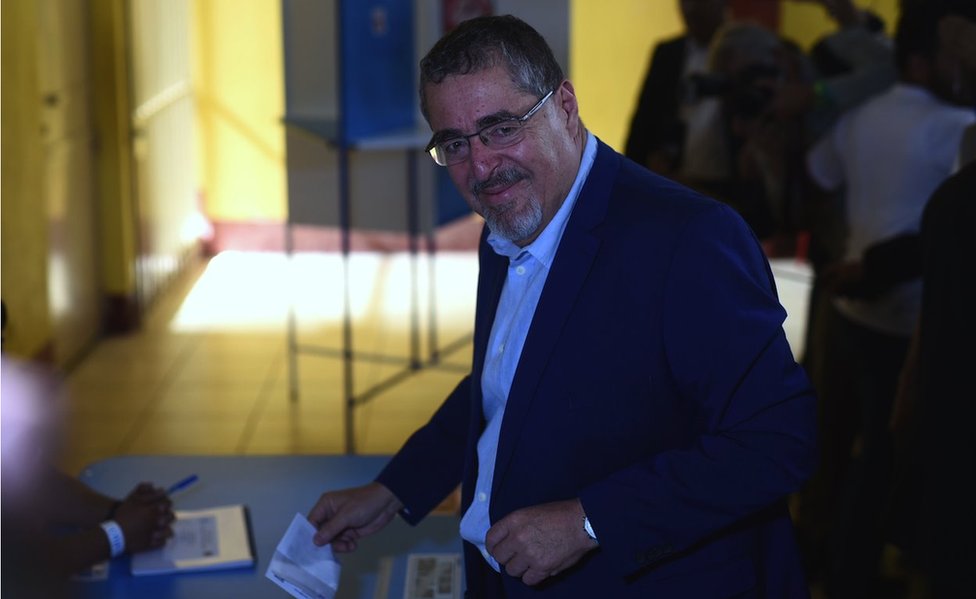
Arévalo was the first candidate for president of the party, given that the 2019 candidacy of the former attorney general Thelma Aldana It was not finally authorized by the electoral authorities.
“He is not the first person from the left to come to power in the democratic stage: the social democrat Álvaro Colom, ironically ex-husband of Sandra Torres, already did so. What Arévalo does have is a much more progressive position due to the party’s own origins,” he says. Jahir Dabroyfrom the Association for Research and Social Studies (ASIES) of Guatemala.
His ideology has already found rejection from the economic elite and the groups that traditionally held power in the country. Many of his opponents described Arévalo as a “communist” and assured that, if he became president, he would end up expropriating lands from the richest (something he never said).
What was one of its main campaign flags is the fight against corruption in the State from a specific anti-corruption cabinet and a surveillance commission, autonomous from the government, created with the same objective. Although he does not contemplate his return, he praised the work of the International Commission against Impunity in Guatemala (CICIG), expelled from the country in 2019.
He also announced that he would request the resignation of the country’s attorney general, Consuelo Porras, described as “corrupt” by the US and responsible for the investigation of dozens of anti-corruption journalists and judges who ended up opting for exile. Although she clarified that she will not be able to interfere in this regard since these are judicial cases, Arévalo did express her wish that they could return to Guatemala.
He also declared that he will protect the rights of the LGBT population and that his government will not allow any discrimination against them, something that his opponents used to claim that he sought to legalize equal marriage and promote abortion. Arévalo denied it.
Fight against corruption
The main challenge of the next president of Guatemala will be to continue trying to improve the living conditions and opportunities of more than half of the population that lives below the poverty line and half of children who suffer from chronic malnutrition.
Considered the largest economy in Central America, the country also has one of the greatest inequalities in Latin America. This is reflected in an ever-increasing migration crisis and the absence of sufficient basic health and education services, especially in rural areas.
Although if there is a specific challenge for Arévalo it will be to try to fulfill his main promise of ending corruption that, according to analysts and international organizations, has kept the State co-opted for years.
“It will be complicated because what we know as the ‘corrupt pact’ has existed in the country for 20 years and it will be difficult to undo it in four years of government. There are many interests involved and it will not be easy to negotiate with those actors who have maintained privileges in the State for so long,” says the Guatemalan political scientist. Gabriela Carrera.
Other of his proposals include the control of prisons and strengthening the National Civil Police in terms of security, generating employment through the construction of roads and infrastructure with public investment, the implementation of more than 400 new health posts and the granting of scholarships for students.
The truth is that the high expectations that many have placed in a new party like Semilla that promises so many changes will have to overcome the fact that have very few allies.
Among them, some social actors, indigenous authorities and urban and youth groups who were already decisive in their success by leading a strong mobilization on social networks, excited after the first round results, could enjoy support.
Challenges and difficulties
But it is more than likely that he will face rejection from agents who have enormous weight and influence in the country: the big businessmen and the traditional economic elite, the evangelical Church and the military sector.
“One of its disadvantages is that we have a political class that has articulated the powers of the State around a not very noble way of doing politics, but one closely linked to cases of corruption. The control of State institutions aims to prevent them from being controlled by other actors who could question corruption or underlying mismanagement, and that can be an obstacle for their government,” says analyst Dabroy.
Arévalo’s difficulties could also be seen in a Congress with a large conservative majority, where Semilla has 23 deputies out of a total of 160, behind the ruling party VAMOS and Torres’ UNE, which have already shown in the past their ability to forge alliances.
But according to Carrera, director of Public Action at the Rafael Landívar University, “the hope that a negotiation with different actors in the country can work is that, if Arévalo’s profile has anything, it is the possibility of mediating. “He is a good negotiator and that can be a great advantage in his future government.”
However, given that the investigations into Semilla are ongoing and there is a long period until Arévalo takes office in January, experts recommend remaining attentive to the decisions that may come from the judicial sphere.
“It seems that this will not end with Sunday’s election but that we will probably continue to see actors trying to manipulate the electoral process,” Dabroy predicted.
“We cannot rule out more surprises because they have been giving us them from the first day of this electoral process. Regardless of who won, I’m sure there are going to be many dissatisfied people and “The panorama can be complicated,” Carrera agreed.
Remember that you can receive notifications from BBC Mundo. Download the new version of our app and activate them so you don’t miss our best content.
thanks for reading our article about Marcelo Ebrard rules out independent candidacy; analyzes searching for the Citizen Movement


